The last drop: a portrait of the artist Lucas Erin
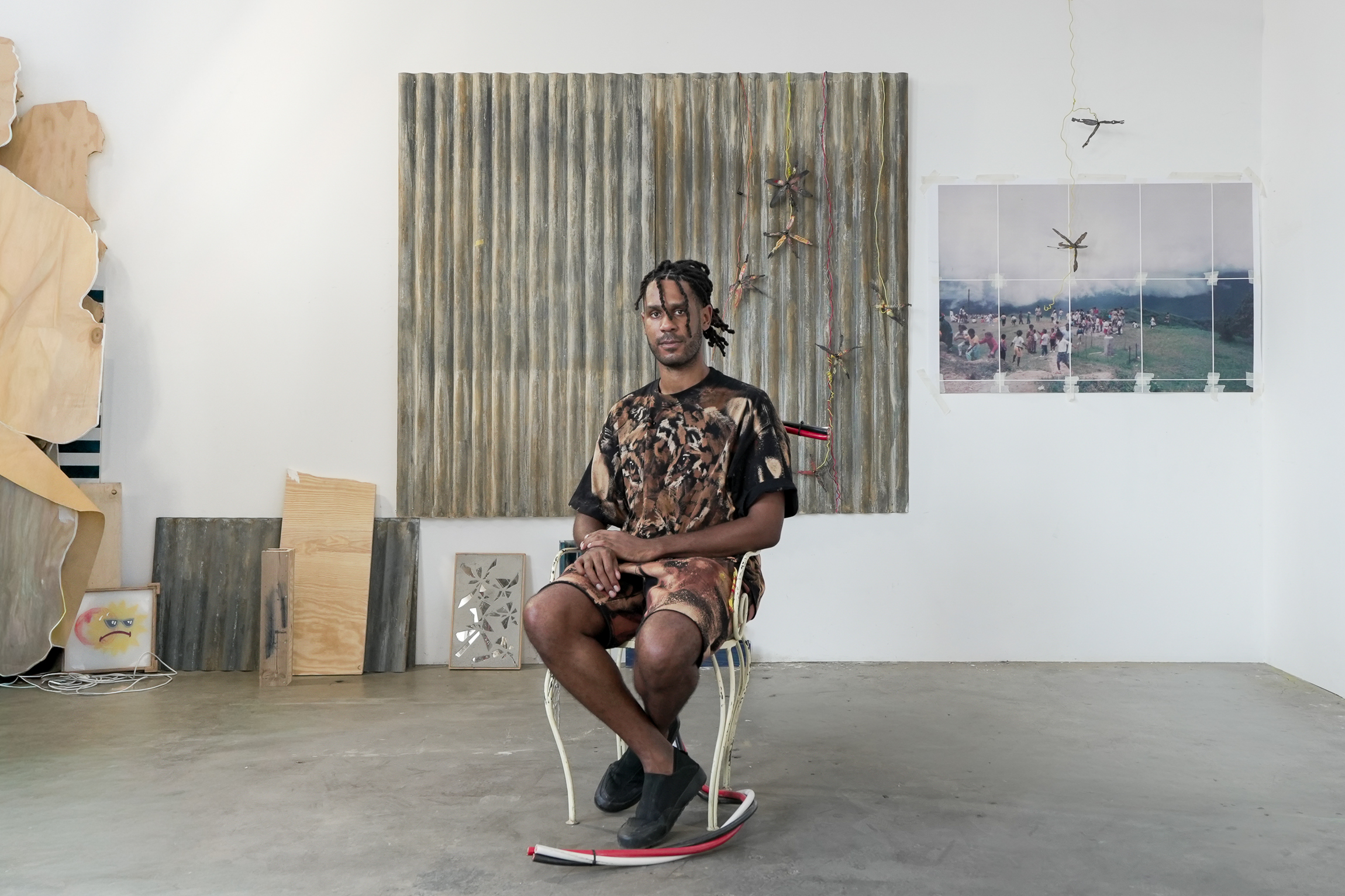 Lucas Erin in his studio, photo: Paula Tyliszczak
The cycle of becoming, being and passing away: things long overlooked are brought to light, while found objects are transformed into carefully crafted, poetic sculptures. The works of Lausanne-based artist Lucas Erin (b. 1990) evoke a universe of closely interwoven stories and associations, many of them centring on his background and the island of Martinique. The Julius Baer Art Collection discovered Erin early on, first buying work from him in 2024. Now the young artist has been awarded the Manor Art Prize 2026 Vaud and his solo exhibition ‘Lucas Erin. La ronde’ is currently on show at Musée cantonal des Beaux-Arts in Lausanne.
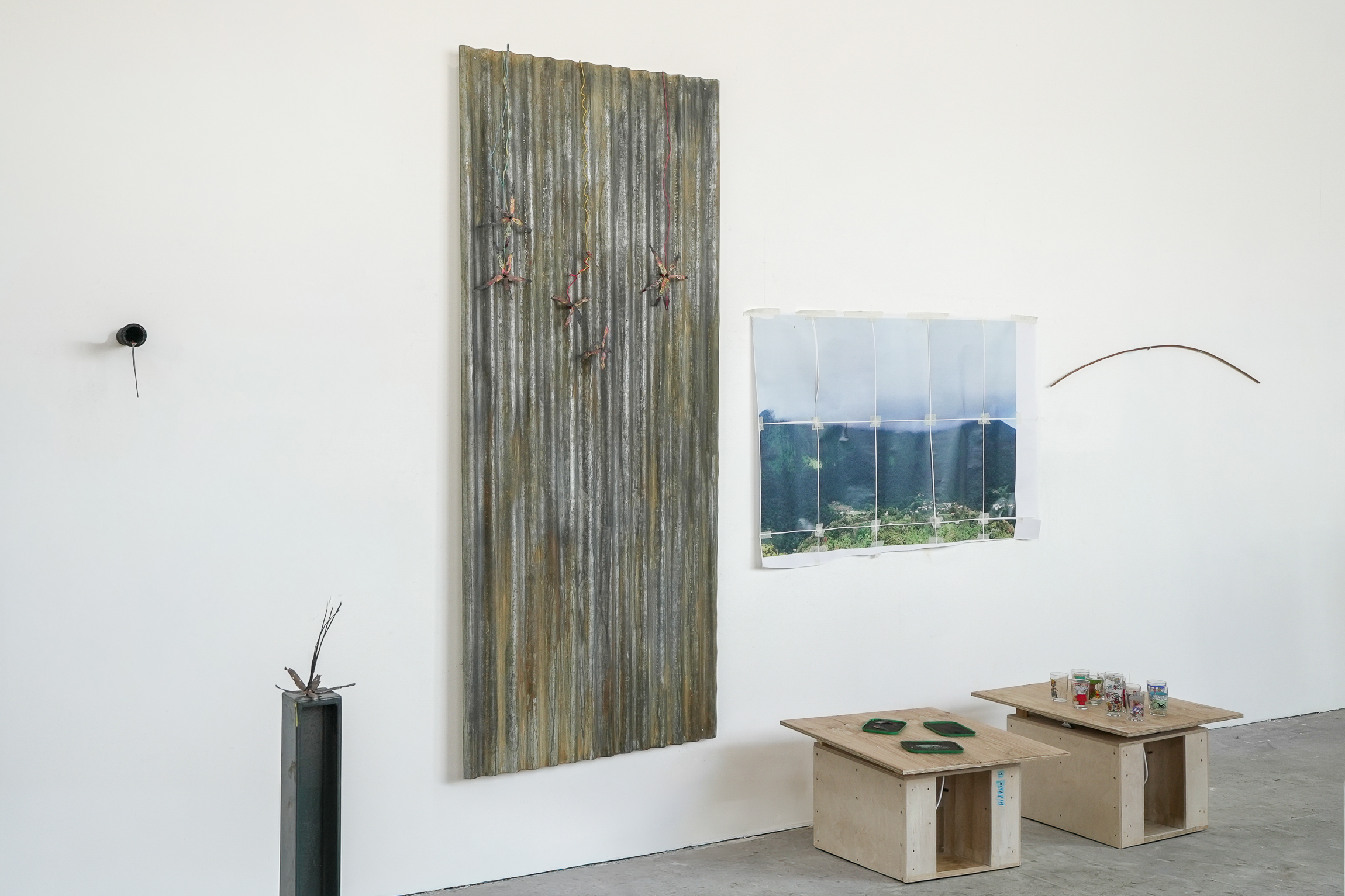
His grandmother’s garden in Martinique
Having grown up in a suburb of Paris, Lucas Erin talks with great tenderness about his grandmother and
her garden on the Caribbean island of Martinique, and of his experiences and memories there. He recalls
how the family would sit with friends on the veranda – always a hub for socialising – chatting and
observing the goings-on in the garden. Close attention was paid to the hourly, daily and seasonal
changes to the lush flora and fauna, in harmony with nature. With its flowers, trees, shrubs and
wildlife, the garden was both a life source and a cherished part of existence that was explored in the
daily morning walk: the eponymous ‘la ronde’. Hummingbirds would flit into the house to steal the last
drops from a bottle filled with a sugary potion (‘Zalimet’, 2024, Julius Baer Art Collection) before
flying outside again, where the blooming mango trees radiated energy and the plants were harvested for
food and medicine. The key factors here are time, patience and natural growth processes. Martinique
itself, the ‘Island of Flowers’ and a French overseas department, is also shaped by the passage of time,
by colonial history and its repercussions, as well as by climate change.
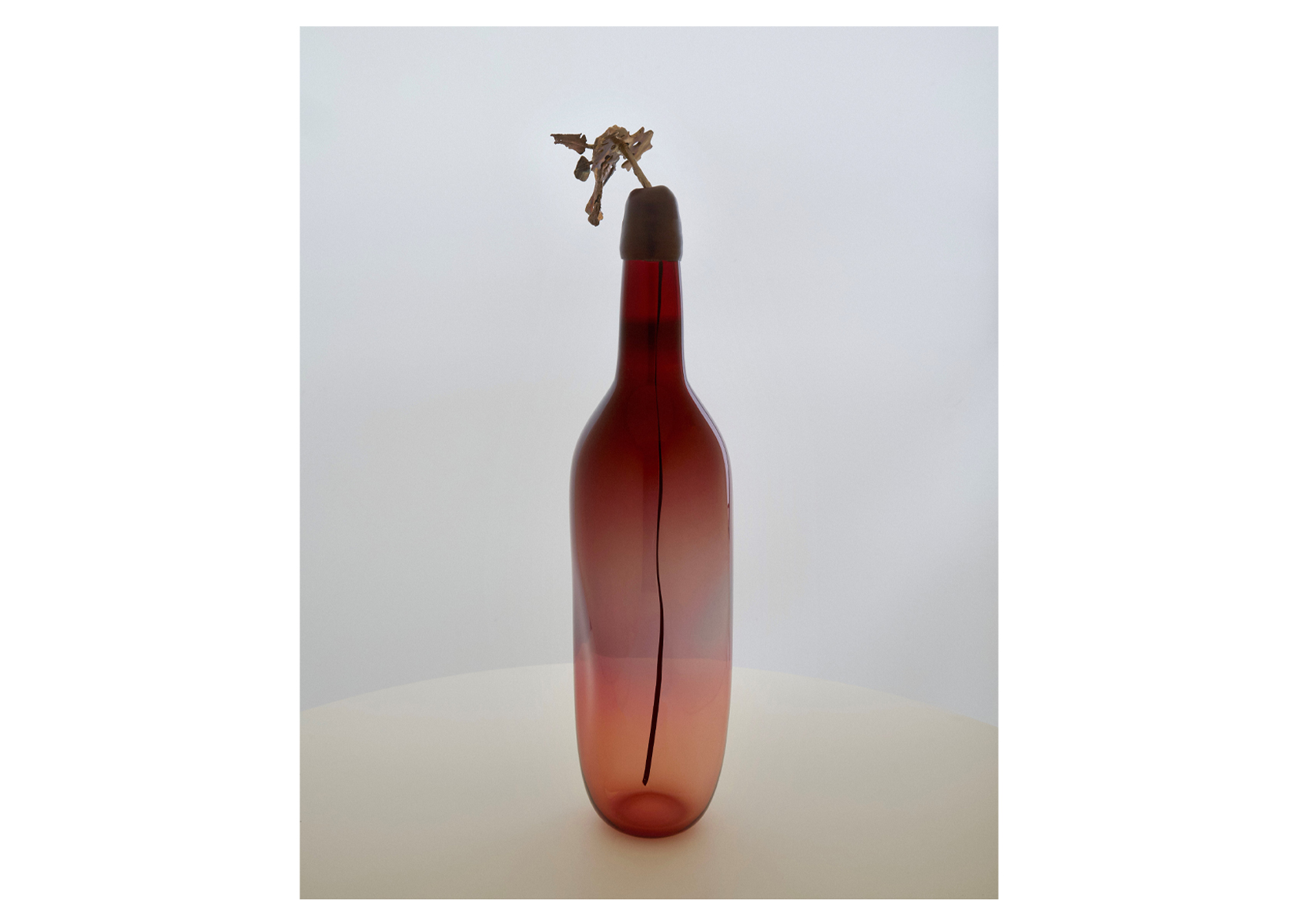 Lucas Erin (b. 1990), ‘Zalimet’, 2024, bronze, glass, wax and ribbon, 45 x 13 cm, courtesy the artist and Julius Baer Art Collection
Metaphor for life
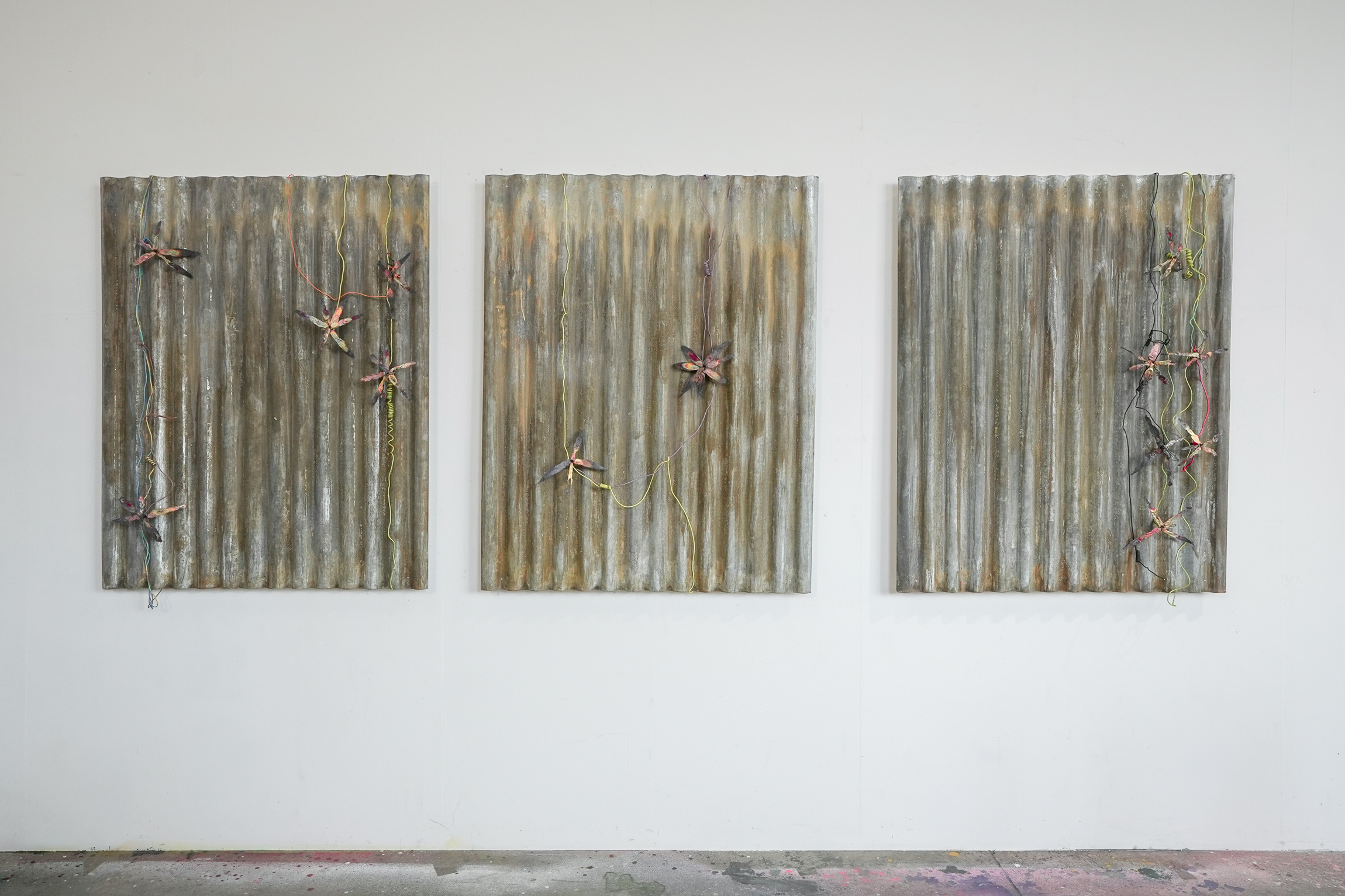
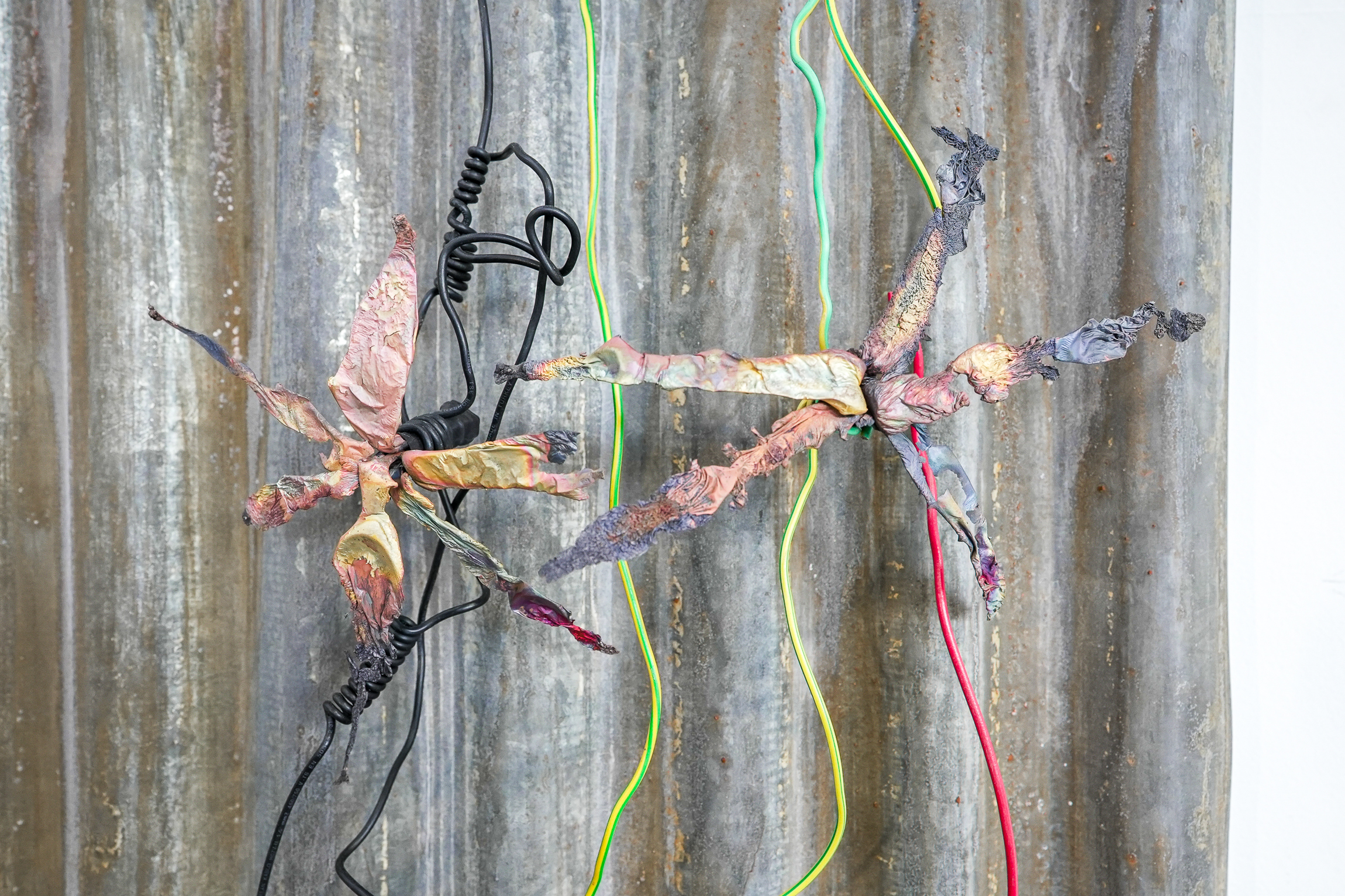
In the 2026 group of works entitled ‘Fey-Tol, Lyannaj’, one of which has been acquired by the Julius
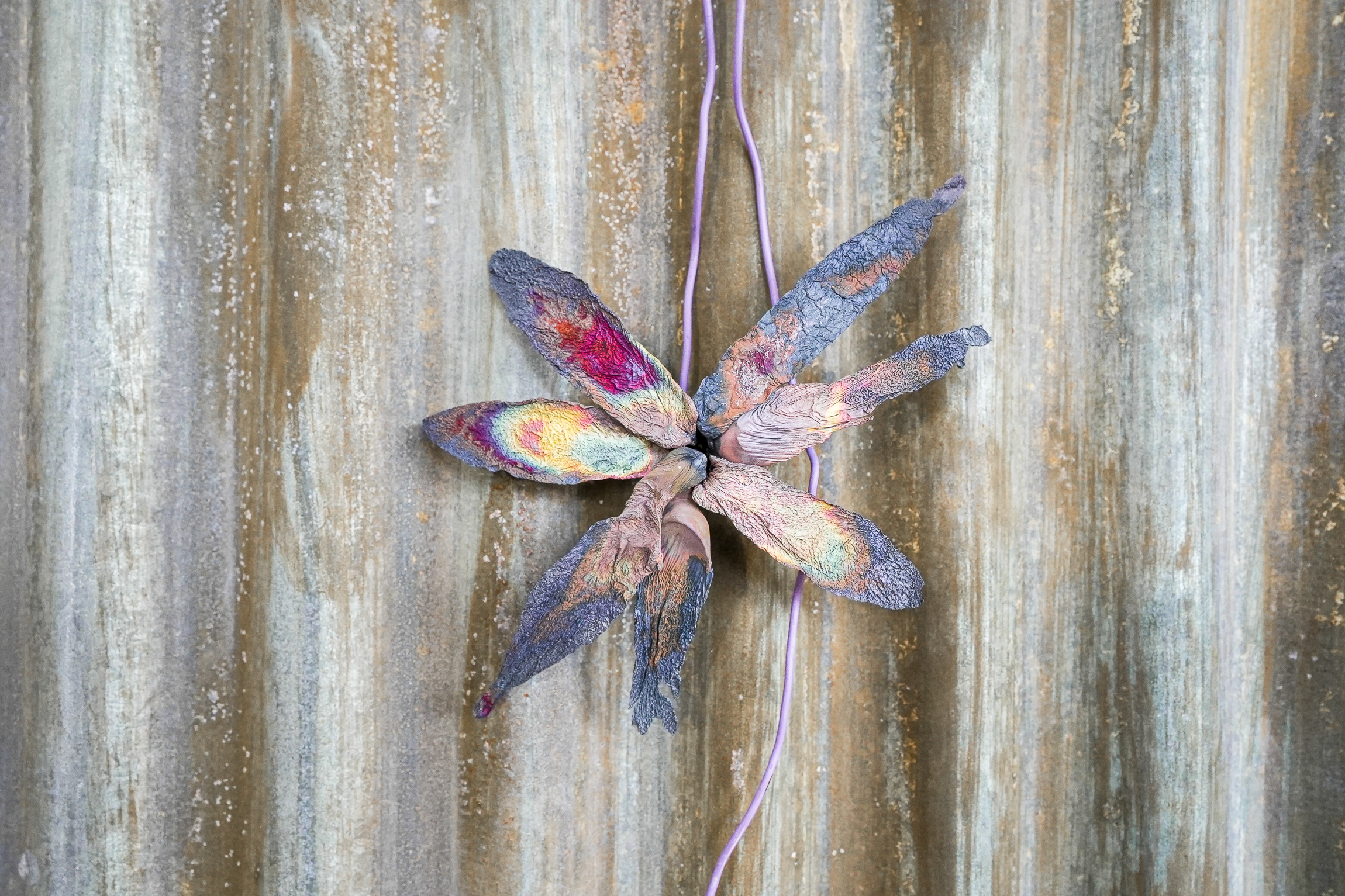
Baer Art Collection, plant stems – in the form of coloured cables from which bronze flowers hang
glinting – climb across rectangles of old, oxidised corrugated iron with a patina that has an almost
poetic quality. As kinetic objects, the flowers occasionally lose their delicate petals, which tumble to
the ground and become absorbed into it as the cycle begins anew. Erin talks about the mango trees
growing in the garden, which would normally flower between January and April but now, due to climate
change, seem to blossom all year round. The corrugated iron sheets serving as roofing are a defining
feature of Martinique’s landscape. They protect people from the severe hurricanes to which the volcanic
island is increasingly exposed – but can equally turn lethal when ripped off the houses by the wind and
tossed through the air, sharp as knives. Walking through the exhibition – in an echo of ‘la ronde’ in
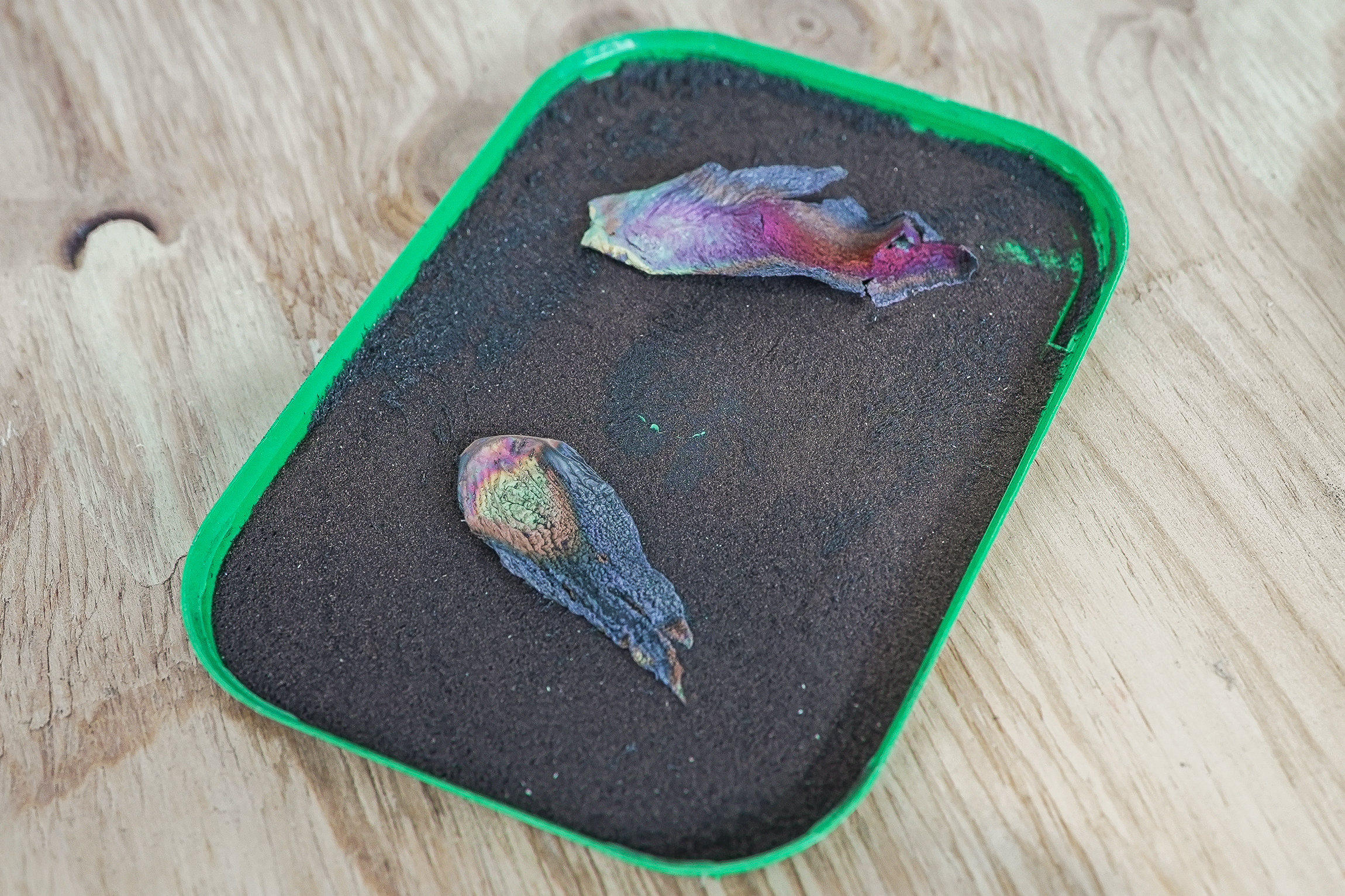
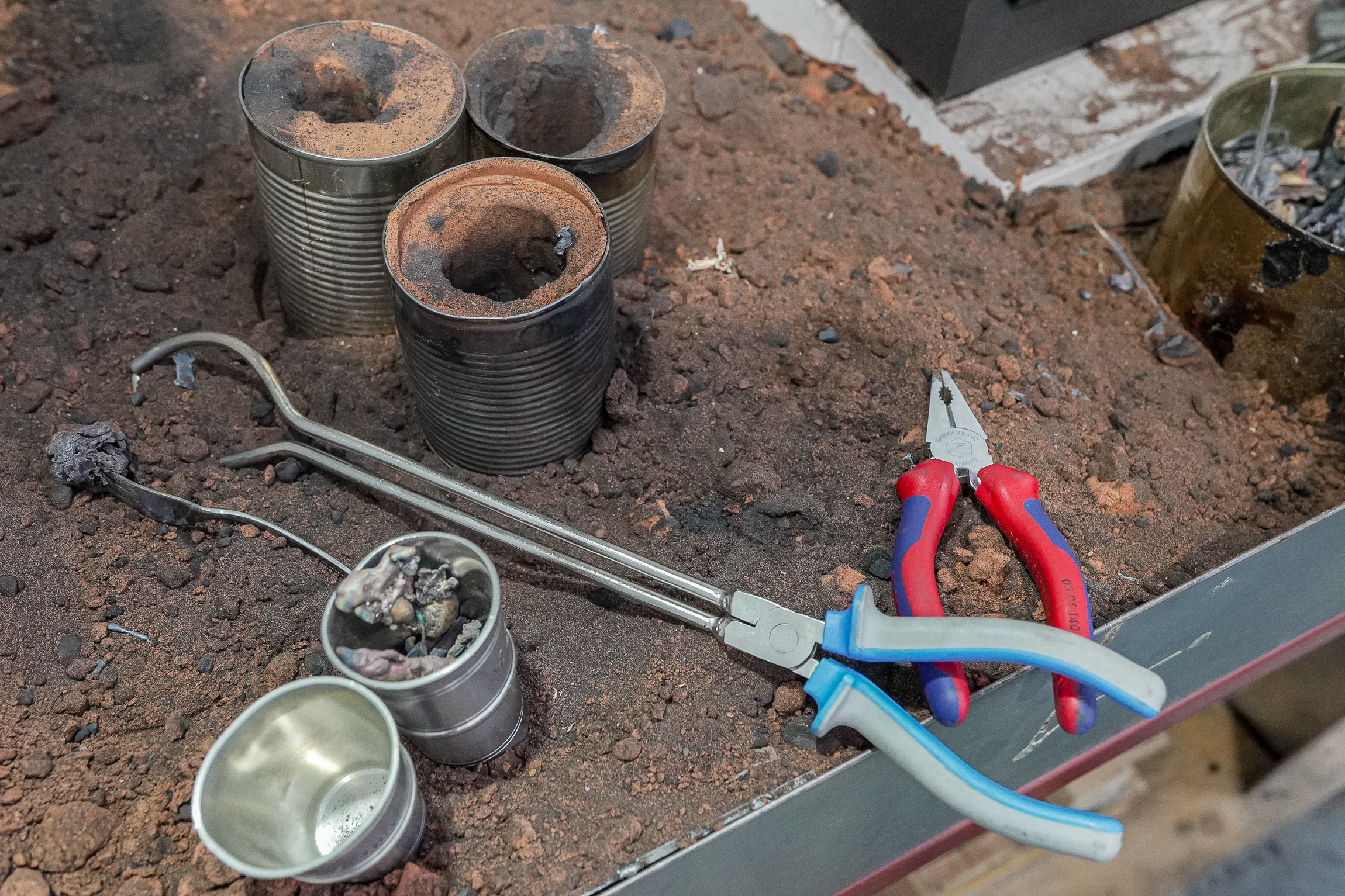
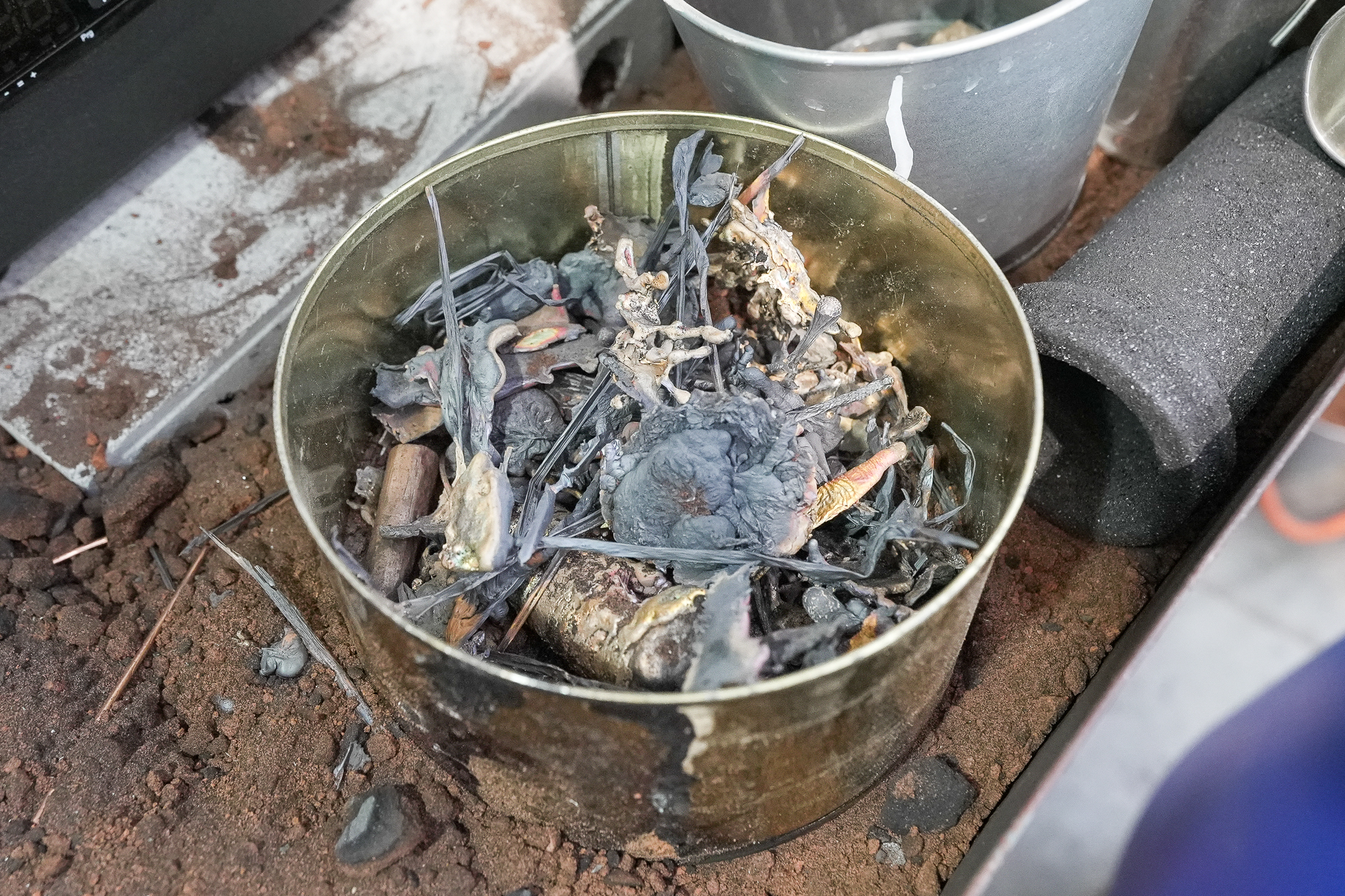
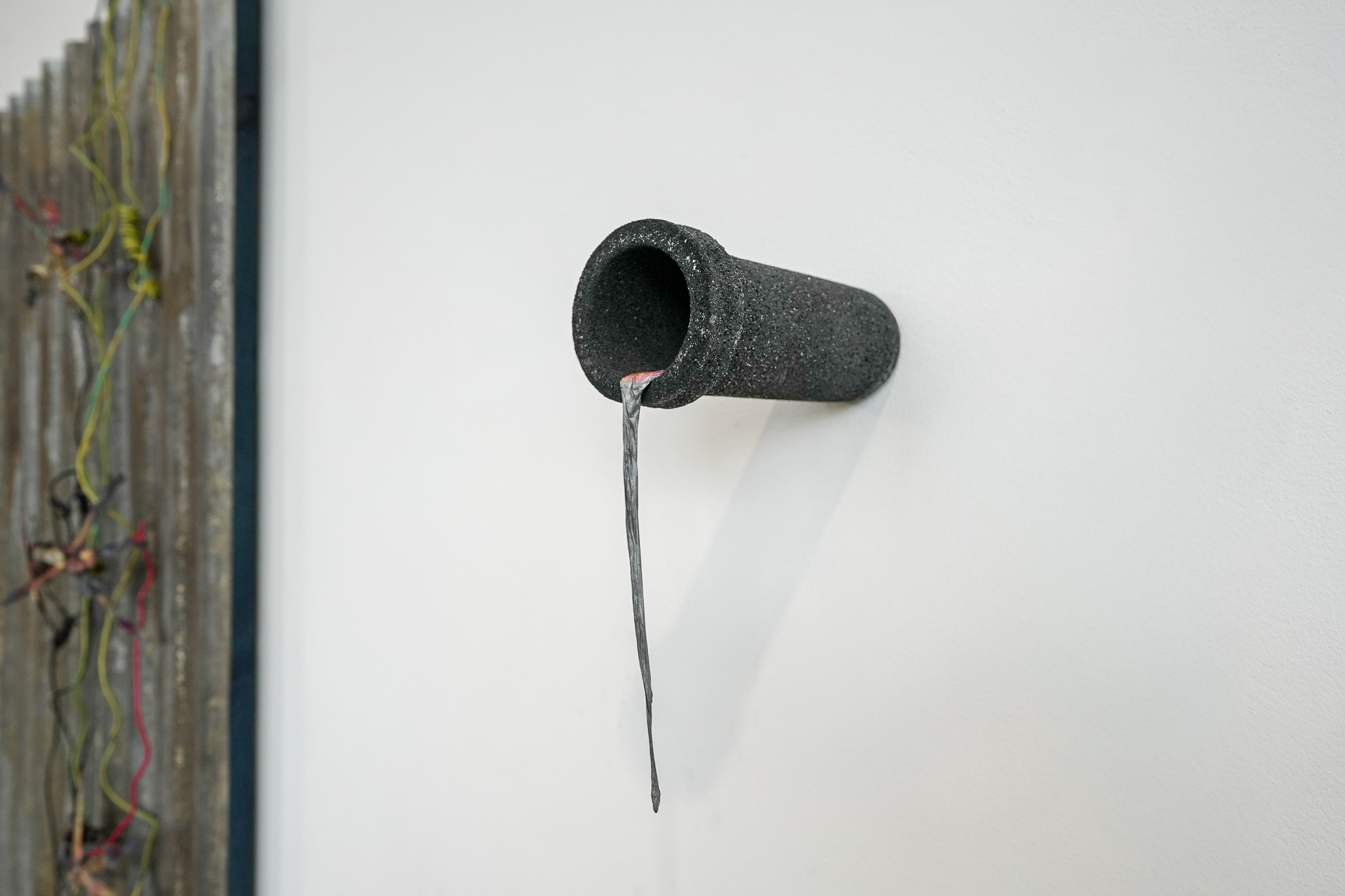
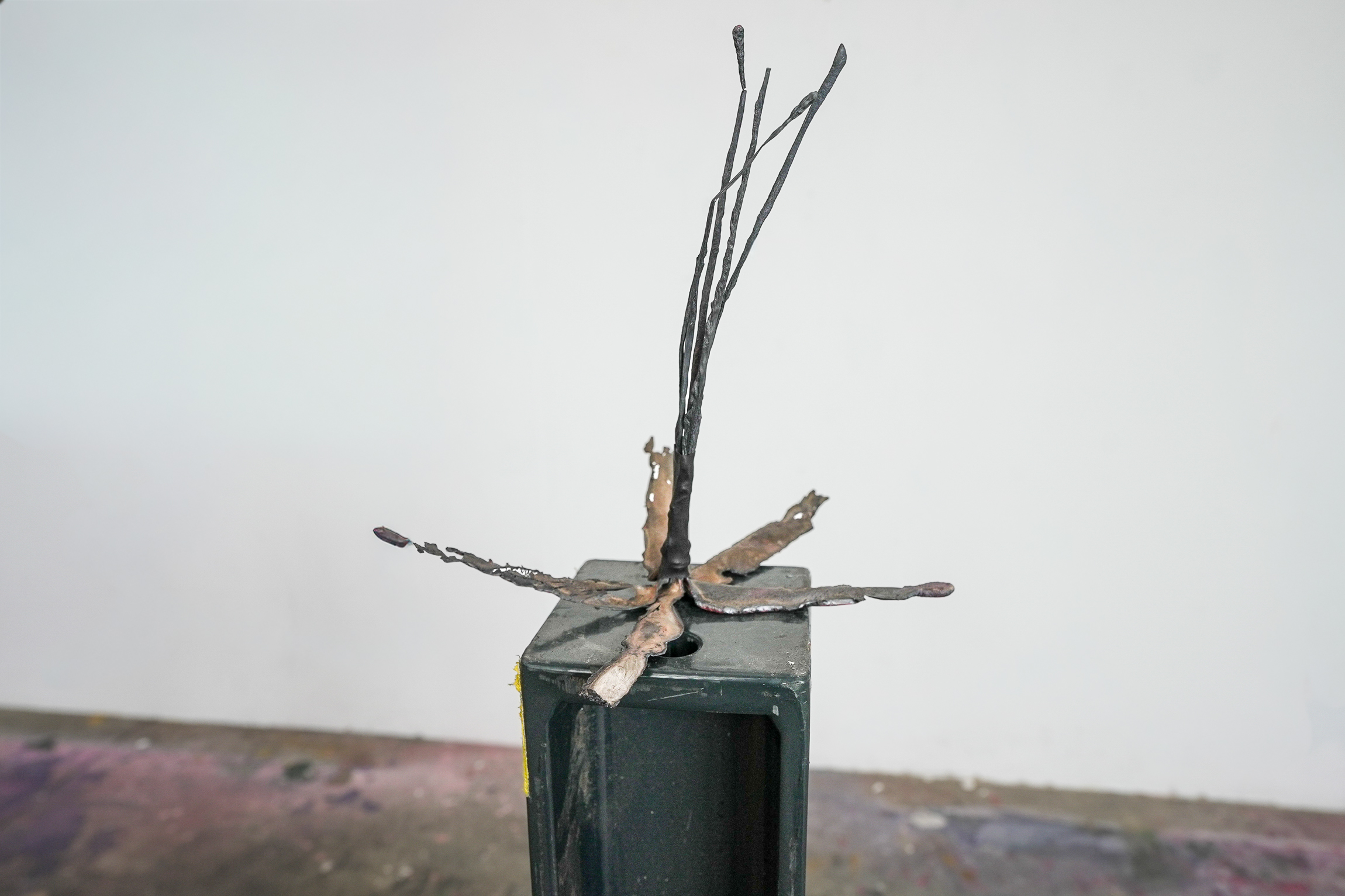
the garden – you encounter small, wall-mounted crucibles, each emitting a tiny drop of molten bronze.
Lucas Erin used these vessels to cast the fragile, shimmering metallic blossoms: the last drop – a
metaphor for how memory lives on and moves through the world: the old giving rise to the new.
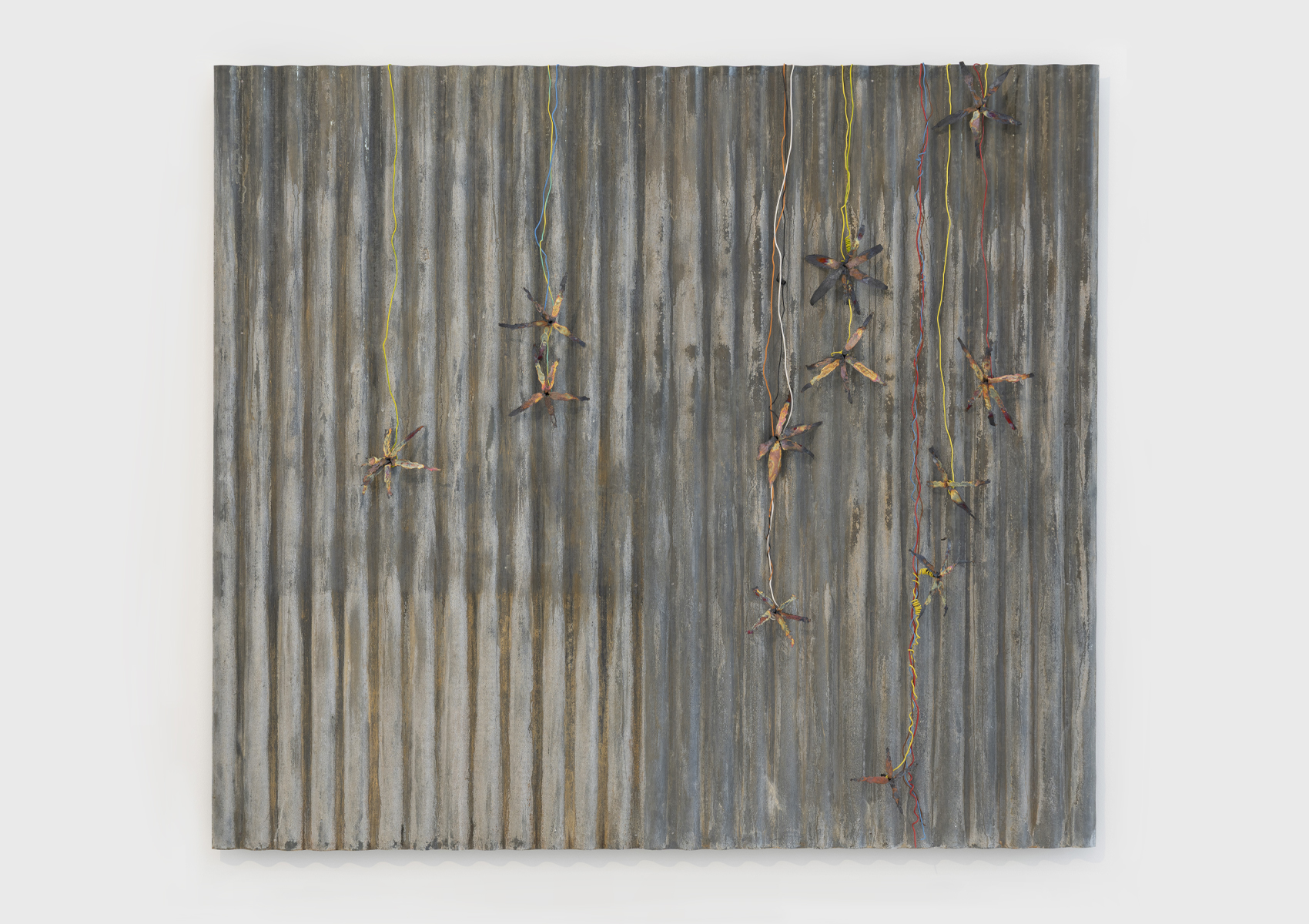 Lucas Erin (b. 1990), ‘Fey-Tol, Lyannaj II’, 2026, cables, bronze, steel and wood, 180 x 200 cm, courtesy the artist and Julius Baer Art Collection
Two sides at play
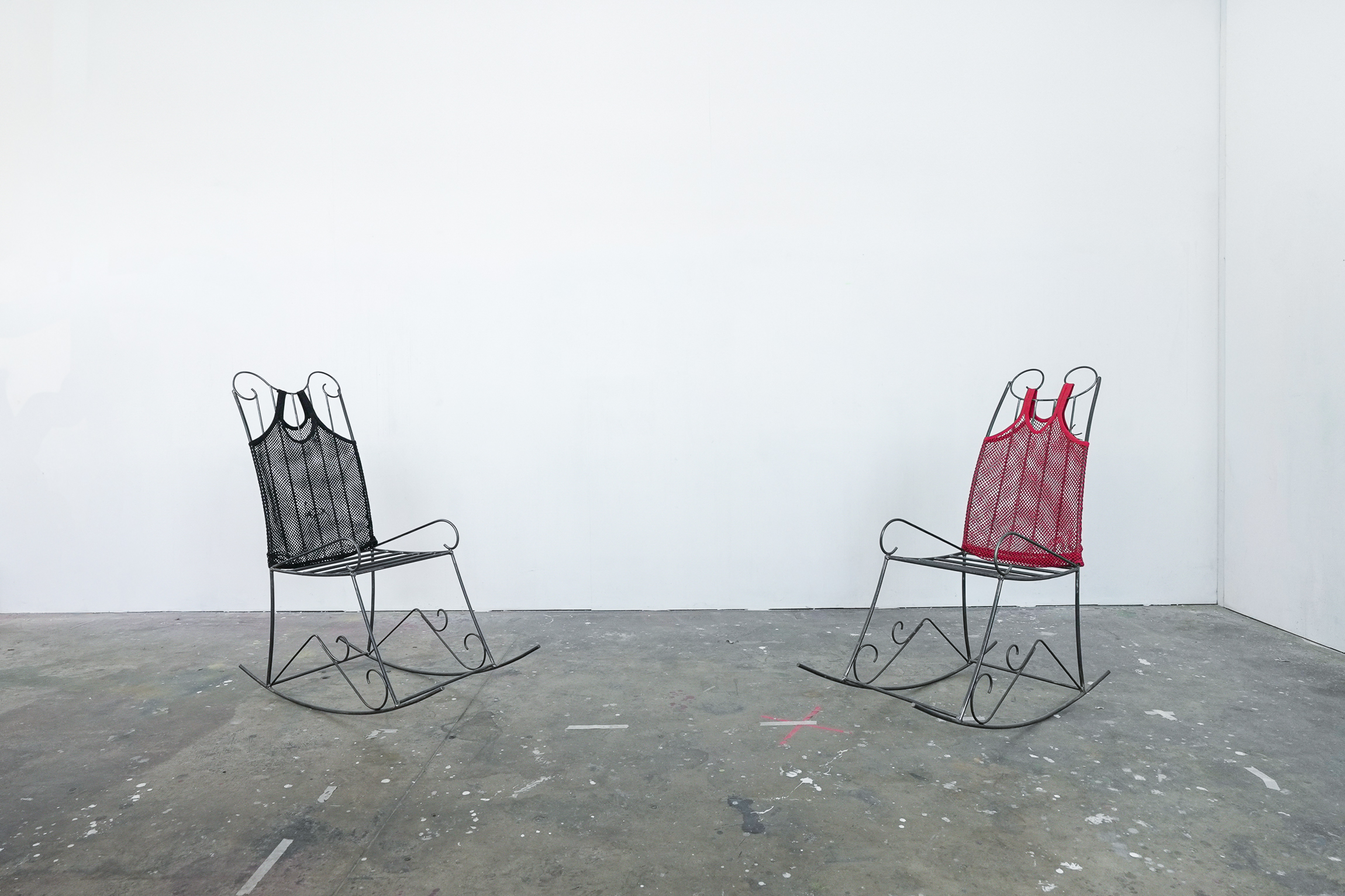
In one corner stands a chair, as a symbol of relaxation and socialising on the veranda. The artist
invites visitors to playfully and actively engage with his works: by sitting on the chair, walking past
it, or simply looking at the artwork. Interactive exchange is essential for Lucas Erin. He is fascinated
by how individuals react to the works and the situations they create. In ‘Hochet’, 2025, a work in the
Julius Baer Art Collection, a white punchbag hangs from the ceiling by a chain. Two bent metal rods are
secured higher up the chain with Swiss cowbells attached to them. It is an ambiguous work, at once
meditative, frustration-relieving, even potentially violent, yet also tender: the viewer might closely
observe the assemblage or they might punch the sack violently and then be startled by the bells ringing,
and immediately embrace it to stop the sound. Another work in the collection, ‘Native Sun’ from 2024, is
similarly ambiguous: a bronze medal hanging from a red silk ribbon honours the winner of a competition.
Yet like a coin, a medal has two sides: a winner always implies a loser.
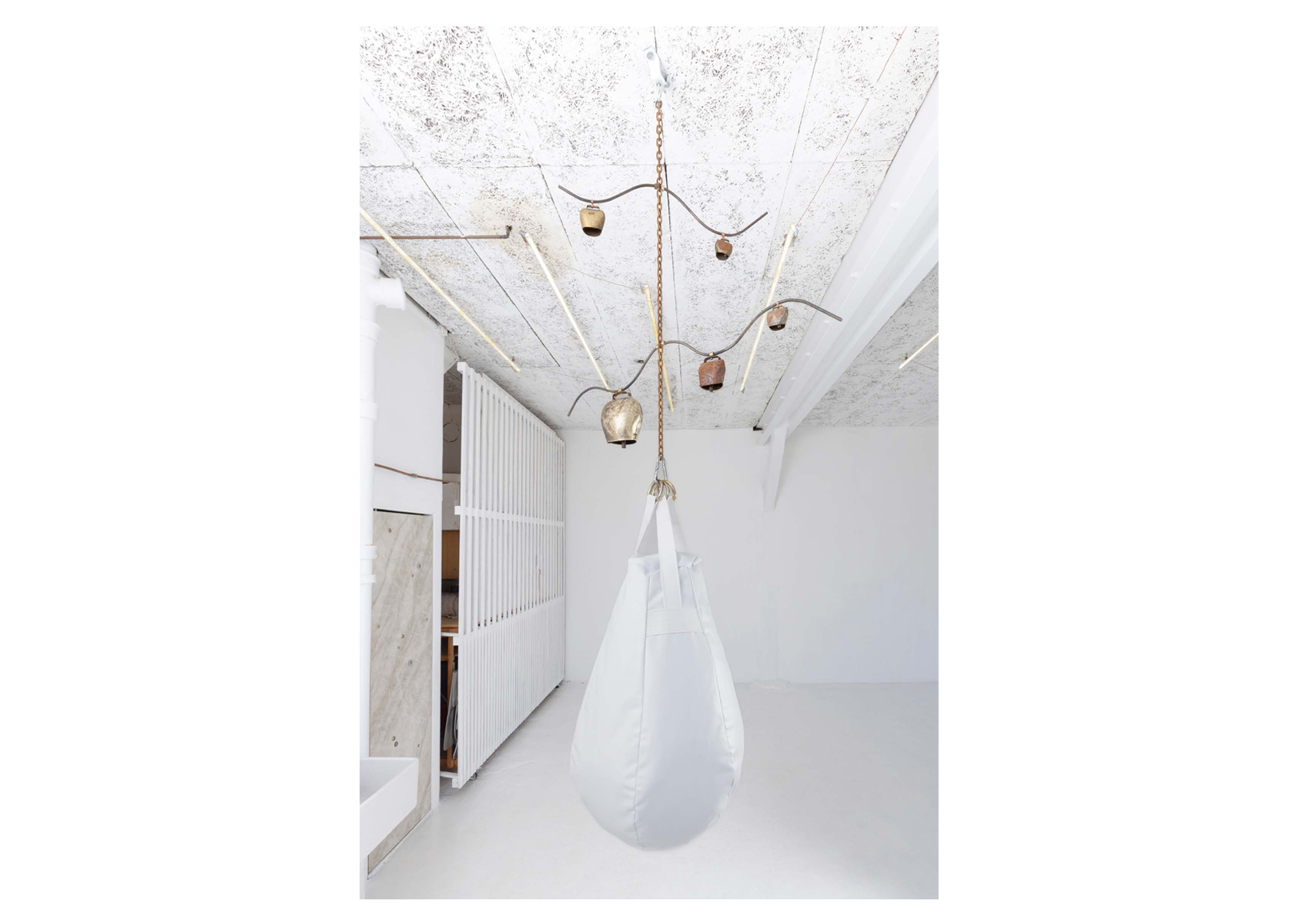 Lucas Erin (b. 1990), ‘Hochet’, punching bag, oxidised steel, brass and bronze (mobile), 52 x 91 x 83 cm, variable height, courtesy the artist and Julius Baer Art Collection
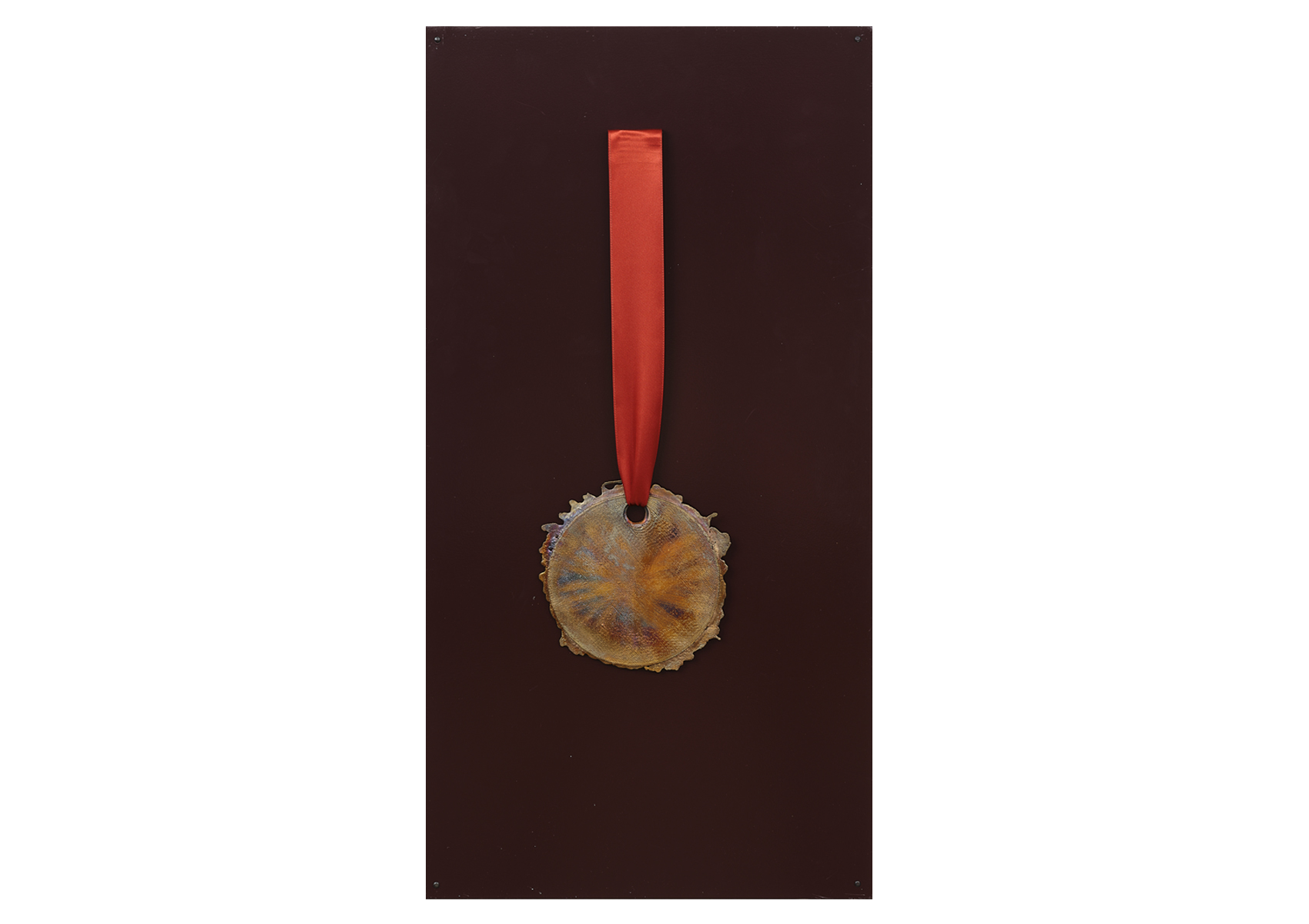 Lucas Erin (b. 1990), ‘Native Sun’, 2024, bronze, ribbon, thermo lacquered steel, 60 x 31 cm, courtesy the artist and Julius Baer Art Collection
Colonial history in the air
Alongside his love of family, of nature and of the found objects he breathes new life into, Erin’s
artworks are invariably permeated by the legacy of colonialism and its consequences for Martinique and
its people. The veranda, an intimate setting where his family socialises, was also the very place where
plantation owners once gathered: a political arena from which enslaved people were barred. The
delightful tumbling bronze petals evoke the toppling of bronze monuments to violent colonial history. It
was the removal of colonial statues in Martinique in the wake of the Black Lives Matter movement that
inspired the artist to create this radiant bronze medal on its coloured ribbon.
Lucas Erin’s work interweaves personal memories with collective history, builds bridges through symbols and metaphors, sets things in motion, transforms used objects into magical ones, and subtly alludes to forms of defiance against processes of normalisation in society.
Author: Barbara Hatebur
Don’t miss ‘Lucas Erin. La ronde’ Manor Art Prize 2026 Vaud, Musée cantonal des Beaux-Arts, Lausanne, until 14.02.2027.